ANI
27 May 2026, 22:31 GMT+10
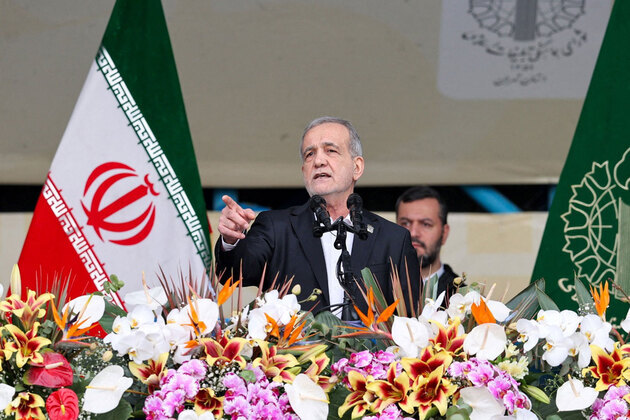
Tehran [Iran], May 27 (ANI): In a bid to fortify domestic resilience amidst ongoing hostilities, Iran President Masoud Pezeshkian has called for a major revitalisation of the national economy, placing the private sector at the forefront of the country's defence strategy.
Addressing representatives of the Tehran Chamber of Commerce, Pezeshkian emphasised that the geopolitical friction confronting the Islamic Republic has fundamentally shifted towards financial destabilisation.
'The main battleground today is the economic war,' Pezeshkian said as per Iran's semi-official Tasnim news agency.
The Iranian President underscored that empowering local business leaders and bolstering independent commerce is vital to sustaining state sovereignty against punitive foreign interventions.
'We believe the more capable, agile, and active the private sector is, the stronger the country's economic foundation will become, and the greater our national power will be in the face of external pressures and threats,' he said.
Connecting the ongoing military standoffs to domestic fiscal pressures, Pezeshkian argued that Washington and Tel Aviv have pivoted their strategy towards systemic economic sabotage after failing to secure definitive victories on the conventional battlefield.
According to the President, this strategic shift by Western adversaries is a direct consequence of their inability to break Iranian defences through armed force alone.
'After failing to achieve its objectives on the military front, the enemy has focused on damaging the country's economic resilience and disrupting the livelihoods of the people.'
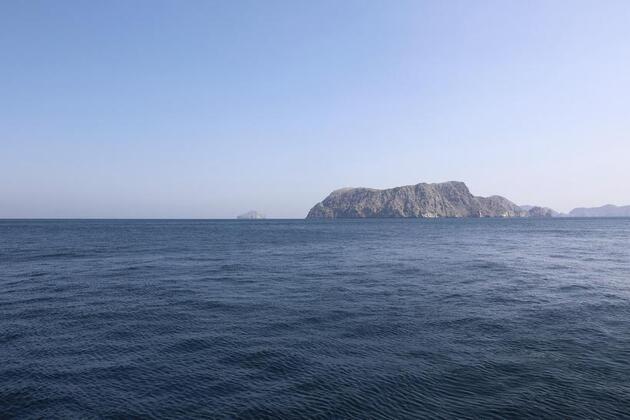
Even as Tehran braces for this domestic economic battlefield, parallel diplomatic channels suggest a potential shift in the broader conflict. The United States and Iran are reportedly making progress towards a preliminary peace understanding following the release of initial details by Iranian state media concerning a draft memorandum of understanding intended to halt hostilities and revive commercial shipping channels through the strategically vital Strait of Hormuz.
Providing a breakdown of this potential breakthrough, accounts broadcast by Iranian state television and the Mizan news agency on Wednesday indicated that the outlined framework proposes a sequential withdrawal of US military forces from areas surrounding Iran, alongside the cessation of a maritime blockade enforced by Washington around the critical waterway.
In exchange for these significant Western concessions, Tehran would pledge to normalise commercial vessel transit through the channel. The ultimate objective under this clause is to return traffic to pre-conflict volumes within a tight one-month timeframe.
Crucially, Iranian media outlets specified that naval warships are excluded from the provisions of the current draft agreement, meaning the diplomatic relief focuses strictly on supply lines. Furthermore, maritime traffic through the channel would be overseen by Tehran in close coordination with Muscat, keeping regional navigation under local management.
However, despite the optimistic tone of the text, the media coverage emphasised that the current framework is strictly tentative and unauthenticated. Officials are underscoring that further intense discussions and 'tangible verification' are mandatory before Tehran commits to a definitive pact.
The timeline for these verifications is already structured. Under the stipulated conditions, should a conclusive accord be finalised within a 60-day window, the arrangement could be codified through a legally binding United Nations Security Council resolution.
The global stakes of these negotiations cannot be understated. As one of the global economy's most pivotal energy transit corridors, the Strait of Hormuz facilitates the movement of a massive percentage of global crude supplies.
Consequently, reports of the potential diplomatic breakthrough immediately impacted global energy markets. The news drove US crude futures lower to trade below USD 89 per barrel as traders anticipated a swift reduction in supply vulnerabilities and a de-escalation of geopolitical friction in West Asia.
These fast-moving diplomatic movements directly coincide with a wider international push by US President Donald Trump to orchestrate a comprehensive regional peace framework encompassing Iran and multiple Middle Eastern nations, reshaping the geopolitical landscape of the entire region. (ANI)
Get a daily dose of Russia Herald news through our daily email, its complimentary and keeps you fully up to date with world and business news as well.
Publish news of your business, community or sports group, personnel appointments, major event and more by submitting a news release to Russia Herald.
More InformationPresident Donald Trump has brazenly engaged in what appears to be insider trading. A bombshell story published in Bloomberg on May...
FORT WORTH, Texas: American Airlines said on May 26 that it plans to equip more than 500 narrow-body aircraft with Starlink in-flight...
NEW YORK CITY, New York: Micron Technology briefly crossed the US$1 trillion market value mark for the first time on May 26 as booming...
NEW YORK CITY, New York: PayPal, once the dominant name in online checkout, is facing mounting pressure from rivals as competition...
TAIPEI, Taiwan: Nvidia Chief Executive Officer Jensen Huang said on May 23 that China remains part of the company's projected US$200...
NEW YORK, New York - U.S. stocks returned from the long Memorial Day weekend with a split performance on Tuesday, as technology shares...
The Turkish leader warned the Israeli prime minister against bombing Gaza during Eid al-Adha celebrations Turkish President Recep...
Frankfurt [Germany], May 27 (ANI): In a significant diplomatic stopover, India's External Affairs Minister (EAM) was warmly received...
Tehran [Iran], May 27 (ANI): In a bid to fortify domestic resilience amidst ongoing hostilities, Iran President Masoud Pezeshkian has...
New Delhi [India], May 27 (ANI): US President Donald Trump's bid to link a potential Iran peace deal to an expanded Abraham Accords...
China is a technology leader in some very significant areas of energy, whether it's vehicles, solar panels or critical minerals processing....
Pyongyang is seeking to update its war deterrence with new high-tech munitions adapted to modern warfare North Korea has tested newly-developed...