ANI
23 Nov 2025, 20:09 GMT+10
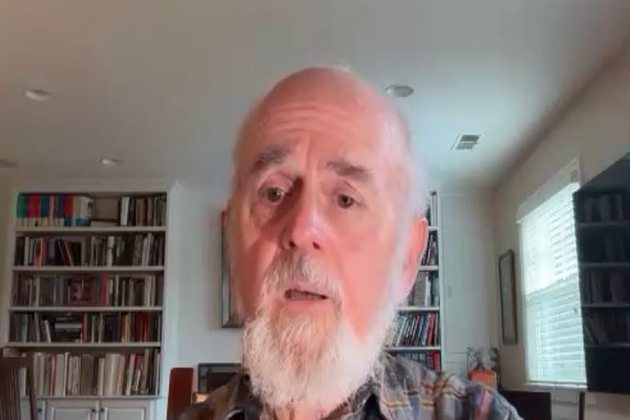
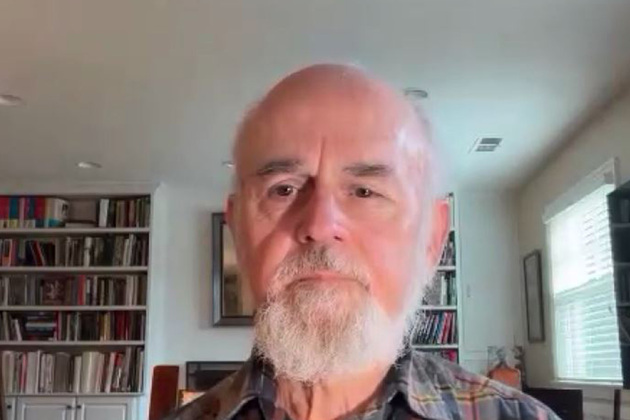
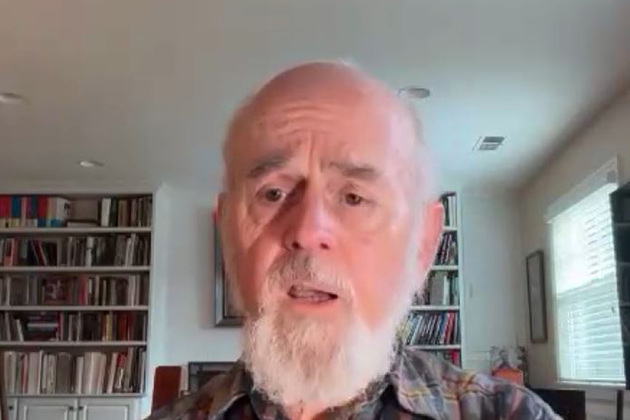
Washington, DC [US], November 23 (ANI): Celebrated former CIA officer James Lawler, widely credited for bringing down A Q Khan's nuclear smuggling network, recounted the early experiences that shaped his intelligence career, describing how he earned the nickname 'Mad Dog' and why he came to call Khan the 'Merchant of Death'.
The former head of the CIA's Counter-Proliferation Division, in an interview with ANI, detailed his role in exposing and sabotaging global nuclear trafficking networks linked to the Pakistani scientist.
Lawler outlined how these covert efforts eventually drew in AQ Khan's proliferation network. The United States had monitored Khan's role in building Pakistan's nuclear capability for years before analysts realised the scale of his outward trafficking.
'We were very slow. We thought it was serious that he was supplying Pakistan, but we did not imagine he was going to turn around and become an outward proliferator,' he noted. 'I nicknamed AQ Khan the 'Merchant of Death.''
He recounted how the CIA had confirmed that Khan's operation was supplying multiple foreign programmes. Addressing questions about Pakistani involvement, Lawler stated, 'AQ Khan had certain Pakistani generals and leaders on his payroll,' while emphasising that individual complicity did not amount to official state policy.
Lawler's narrative detailed his counter-proliferation career, which started during a posting in a 'beautiful Alpine country' known for advanced technology sought by states pursuing nuclear weapons. After returning to CIA headquarters in 1994, he was selected to lead the counter-proliferation office in the European division and was later assigned to infiltrate and disrupt the Iranian nuclear weapons programme.
Expanding on the methods he adopted, Lawler explained how inspiration from Felix Dzerzhinsky's 'Trust' operation led him to establish covert overseas entities that appeared to supply nuclear-related technology. 'If I want to defeat proliferation and proliferators, I need to become a proliferator,' he noted. These entities were used in sting operations to deliver compromised materials designed to hinder illicit nuclear activity. 'We took the reverse of the Hippocratic oath. We always did harm.'
This approach aligned with how AQ Khan's network itself evolved. Over the decades, the network expanded significantly, shifting from procurement to full-scale trafficking. 'Instead of being a consumer of this technology, they became a purveyor of the technology,' Lawler observed, highlighting Khan's influence and popularity in Pakistan.
He linked the slow early response from the United States to limited resources and competing geopolitical crises in the 1970s and 1980s, including the Soviet invasion of Afghanistan and conflicts in Latin America. He rejected claims that Saudi pressure shaped US inaction, emphasising instead that counter-proliferation only became a priority in the 1990s.
A turning point came once analysts presented evidence confirming outward proliferation. The CIA then expanded contacts and infiltrated the network across multiple jurisdictions with a small team. No more than 10 officers at headquarters focused exclusively on the operation, supported by personnel overseas.
Following 9/11, concerns about Libya, then a designated state sponsor of terrorism, heightened the urgency of the mission. Lawler highlighted the CIA's interception of the BBC China freighter, which he noted was carrying 'hundreds of thousands of nuclear components.' When US negotiators confronted Libyan officials with the seized material, 'You could have heard a pin drop.' Libya later dismantled its programme, and he recalled 'dancing a little happy jig' beside the recovered containers, noting that the move likely prevented Gaddafi from using such weapons years later.
The broader proliferation picture also involved Iran. Lawler described how Iran's programme relied on designs originally stolen from URENCO, using the same P1 and P2 centrifuge models supplied through AQ Khan. Khan's network also passed ballistic missile technology and a Chinese atomic bomb blueprint. 'I think they got all of it,' he noted.
This led to his warning that an Iranian nuclear weapon could trigger a 'nuclear pandemic,' prompting regional powers to seek their own deterrents and sharply increasing the risk of nuclear conflict in the Middle East.
Lawler also addressed why the United States tolerated Pakistan's nuclear development while opposing Iran's, suggesting that policymakers may have turned 'a blind eye' because of Pakistan's role in Afghanistan, while acknowledging that many decisions had long-term consequences.
His account included close monitoring of Pakistan's nuclear assets after 9/11. CIA Director George Tenet and the Counterterrorist Center ensured that AQ Khan was not providing nuclear material to al-Qaeda. Tenet personally confronted then-Pakistani leader Pervez Musharraf with evidence of Khan's proliferation activity.
Defending CIA sabotage methods, Lawler explained that the agency ensured equipment supplied to illicit programmes was compromised. Centrifuge facilities were particularly vulnerable, and the CIA made certain that 'things would constantly break and not work.'
Reflecting on his decades of work, Lawler noted that he had no major regrets and found deep purpose in counter-proliferation efforts. He now writes spy novels based on his experiences, all cleared by the CIA's review board.
As he reflected on his own past, Lawler traced the origin of his nickname, 'Mad Dog,' to an incident in the late 1980s while posted in France. He recalled being attacked by a German shepherd during a morning run, fighting the dog off, and later being warned it was likely rabid. 'I made a list of all the people who I was going to bite in case I got rabies. That led to my nickname, which I come by quite honestly,' he said, noting that many colleagues still use it.
He underscored the importance of closer cooperation between India and the United States, describing earlier relations as 'in between' and neither adversarial nor fully aligned. He emphasised shared strategic interests and warned that a nuclear exchange in South Asia would leave 'only losers' and cause global devastation.
Lawler, who served in the CIA from 1980 to 2005, stated that preventing proliferation remains essential to reducing nuclear dangers even as full disarmament remains distant. (ANI)
Get a daily dose of Russia Herald news through our daily email, its complimentary and keeps you fully up to date with world and business news as well.
Publish news of your business, community or sports group, personnel appointments, major event and more by submitting a news release to Russia Herald.
More InformationNEW YORK CITY, New York: Verizon embarked on one of the most significant restructurings in its history when it announced plans on November...
STOCKPORT, U.K.: Greater Manchester is taking another significant step toward reshaping its regional economy, launching a £1 billion...
DHAKA/NEW DELHI: The Bangladesh High Court on November 19 paused arbitration proceedings in Singapore between the country's power development...
LONDON, UK - The owner of the Daily Mail has reached an agreement to acquire The Telegraph Media Group in a landmark £500 million deal,...
DOVER, Delaware: As attention fixates on Elon Musk's newly approved trillion-dollar compensation package, a separate, older pay deal...
SANTA CLARA, California: Nvidia delivered a powerful reminder of its dominance in the AI hardware boom on November 19, reporting results...
NEW YORK CITY, New York: New research released on November 17 shows that enrollment of new international students at U.S. universities...
Washington, DC [US], November 23 (ANI): Celebrated former CIA officer James Lawler, widely credited for bringing down A Q Khan's nuclear...
New Delhi [India], November 23 (ANI): Defence Minister Rajnath Singh, on Sunday, referring to a quote of former Deputy Prime Minister...
Washington, DC [US], November 23 (ANI): Ex-CIA operations officer James Lawler, who led covert missions that penetrated, sabotaged,...
Washington, DC [US], November 23 (ANI): The United States must build a much stronger relationship with India, calling the interests...
New Delhi [India], November 23 (ANI): Defence Minister Rajnath Singh on Sunday said that many minority communities in neighbouring...